

The Artificial Intelligence and Machine Learning (AI & ML) branch is at the forefront of the digital revolution, driving innovations that are transforming industries and improving lives. This cutting-edge program focuses on equipping students with a strong foundation in computational intelligence, data-driven decision-making, and algorithmic problem-solving.
Students are trained in core areas such as:
- Machine Learning, Deep Learning, and Neural Networks
- Natural Language Processing and Computer Vision
- Data Analytics and Big Data
- Robotics and Intelligent Systems
- AI Ethics and Responsible AI
With a curriculum aligned to industry standards and emerging technologies, the program emphasizes hands-on learning through real-world projects, research opportunities, and industry internships. Students gain exposure to advanced tools like Python, Tensor Flow, Keras, and cloud platforms such as AWS and Azure.
A New Era Begins: Launch of AIML Department
The Department of Artificial Intelligence & Machine Learning (AIML) at SJM Institute of Technology, Chitradurga, was formally inaugurated on 20th March 2026 at 3:00 PM at the AIML Department premises. The event marked a significant milestone in strengthening the institution’s commitment to advanced and emerging technologies, particularly in the fields of Artificial Intelligence and Machine Learning.


Graduates from this branch are highly sought after in sectors including:
- Software and IT
- Healthcare and Bioinformatics
- Finance and Fintech
- Agriculture, Manufacturing, and Smart Cities
Our department fosters innovation, critical thinking, and ethical practices, preparing future-ready professionals to lead in AI-driven global ecosystems.
- Programme Duration: 4 years (8 semesters)
- Programme Type: Full-time
Eligibility Criteria
The candidate should have passed the 2nd PUC/12th/Equivalent Exam with English as one of the languages and obtained a minimum of 45% of marks in aggregate in Physics and Mathematics along with Chemistry/Biotechnology/Biology/Electronics/Computers (40% for Karnataka reserved category candidates).
Candidate must also qualify in one of the following entrance exams: CET/ COMED-K/JEE/AIEEE
Affiliated to VTU
FAQ
What are the admission requirements for top AI and ML engineering colleges in Karnataka?
To join SJMIT, among the top AI and ML engineering colleges in Bangalore, candidates must have passed 12th with at least 45% in Physics and Mathematics, along with one optional subject. They must also qualify in entrance exams like CET, COMED-K, JEE, or AIEEE.
What are the career opportunities after the completion of this course?/What will I do once I graduate?
Artificial Intelligence AI and Machine Learning graduates will be able to design, create and implement intelligent software applications to solve real-world business and industrial problems. They use the latest tools and open source technologies to recommend apt solutions. They can figure out how to evaluate the ethical, legitimate, proficient and social standards of engineering knowledge and practices. AI and ML graduates can also showcase their expertise in knowledge management, mobile and distributed application development, intelligence web/e-commerce development, database administration, computer hardware, networking, education and training and decision support systems using machine learning concepts with the help of the latest tools and technologies.
Programs Offered |
|
Sl. No. |
Degree | Course | Date of Commencement | Intake |
| 1. | Bachelor of Engineering | Artificial Intelligence and Machine Learning | 2025-26 | 60 |
VISION:
“To develop skilled and competitive professionals in Artificial Intelligence and Machine Learning by promoting quality education, creativity, and inclusive learning through education and research.”
MISSION:
- To offer modern infrastructure and a supportive learning environment in AI & ML.
- To help students build strong knowledge and practical skills in Artificial Intelligence and Machine Learning.
- To prepare students for good jobs in industry, research, or to start their own ventures, through continuous learning and hands-on training.
- To promote ethical values, teamwork across different fields, and the use of AI for the betterment of society.
Program Outcomes (PO’s) |
PO1: Engineering Knowledge: Apply knowledge of mathematics, natural science, computing, engineering fundamentals and an engineering specialization as specified in WK1 to WK4 respectively to develop to the solution of complex engineering problems.
PO2: Problem Analysis: Identify, formulate, review research literature and analyze complex engineering problems reaching substantiated conclusions with consideration for sustainable development. (WK1 to WK4)
PO3: Design/Development of Solutions: Design creative solutions for complex engineering problems and design/develop systems/components/processes to meet identified needs with consideration for the public health and safety, whole-life cost, net zero carbon, culture, society and environment as required. (WK5)
PO4: Conduct Investigations Of Complex Problems: Conduct investigations of complex engineering problems using research-based knowledge including design of experiments, modeling, analysis & interpretation of data to provide valid conclusions. (WK8).
PO5: Engineering Tool Usage: Create, select and apply appropriate techniques, resources and modern engineering & IT tools, including prediction and modeling recognizing their limitations to solve complex engineering problems. (WK2 and WK6)
PO6: The Engineer and The World: Analyze and evaluate societal and environmental aspects while solving complex engineering problems for its impact on sustainability with reference to economy, health, safety, legal framework, culture and environment. (WK1, WK5 and WK7).
PO7: Ethics: Apply ethical principles and commit to professional ethics, human values, diversity and inclusion; adhere to national & international laws. (WK9)
PO8: Individual and Collaborative Team work: Function effectively as an individual, and as a member or leader in diverse/multi-disciplinary teams.
PO9: Communication: Communicate effectively and inclusively within the engineering community and society at large, such as being able to comprehend and write effective reports and design documentation, make effective presentations considering cultural, language, and learning differences.
PO10: Project Management and Finance: Apply knowledge and understanding of engineering management principles and economic decision-making and apply these to one’s own work, as a member and leader in a team, and to manage projects and in multidisciplinary environments.
PO11: Life-Long Learning: Recognize the need for, and have the preparation and ability for i) independent and life-long learning ii) adaptability to new and emerging technologies and iii) critical thinking in the broadest context of technological change. (WK8)
Knowledge and Attitude Profile(WK) |
WK1: A systematic, theory-based understanding of the natural sciences applicable to the discipline and awareness of relevant social sciences.
WK2: Conceptually-based mathematics, numerical analysis, data analysis, statistics and formal aspects of computer and information science to support detailed analysis and modeling applicable to the discipline.
WK3: A systematic, theory-based formulation of engineering fundamentals required in the engineering discipline.
WK4: Engineering specialist knowledge that provides theoretical frameworks and bodies of knowledge for the accepted practice areas in the engineering discipline; much is at the forefront of the discipline.
WK5: Knowledge, including efficient resource use, environmental impacts, whole-life cost, re-use of resources, net zero carbon, and similar concepts, that supports engineering design and operations in a practice area.
WK6: Knowledge of engineering practice (technology) in the practice areas in the engineering discipline.
WK7: Knowledge of the role of engineering in society and identified issues in engineering practice in the discipline, such as the professional responsibility of an engineer to public safety and sustainable development.
WK8: Engagement with selected knowledge in the current research literature of the discipline, awareness of the power of critical thinking and creative approaches to evaluate emerging issues.
WK9: Ethics, inclusive behavior and conduct. Knowledge of professional ethics, responsibilities, and norms of engineering practice. Awareness of the need for diversity by reason of ethnicity, gender, age, physical ability etc. with mutual understanding and respect, and of inclusive attitudes.
Program Specific Outcomes (PSO’s) |
PSO 1: Apply core subject knowledge, programming, mathematical, and computational skills to analyze and solve engineering problems using Artificial Intelligence and Machine Learning techniques
PSO 2: Design, develop, and implement intelligent systems and data-driven solutions to address real-world and multidisciplinary problems.
Teaching Faculty Details |
| Sl.No. | Faculty Name | Designation | Exp. in years | Qualification | Contact No. & Email ID |
| 1 |  Dr. Aravinda T V Dr. Aravinda T V |
Prof. & HOD | 20 | B.E, M.Tech,Ph.D. | 9483772655 aravinda@sjmit.ac.in |
| 2 | 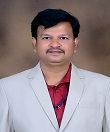 Prof. Jayadevappa R S Prof. Jayadevappa R S |
Assistant Professor | 16 | B.E, M.Tech,(Ph.D). | rsjayadev96@sjmit.ac.in |
| 3 |  Prof. Dhanush S Prof. Dhanush S |
Assistant Professor | 03 | B.E, M.Tech | dhanushs@sjmit.ac.in |