
Vision |
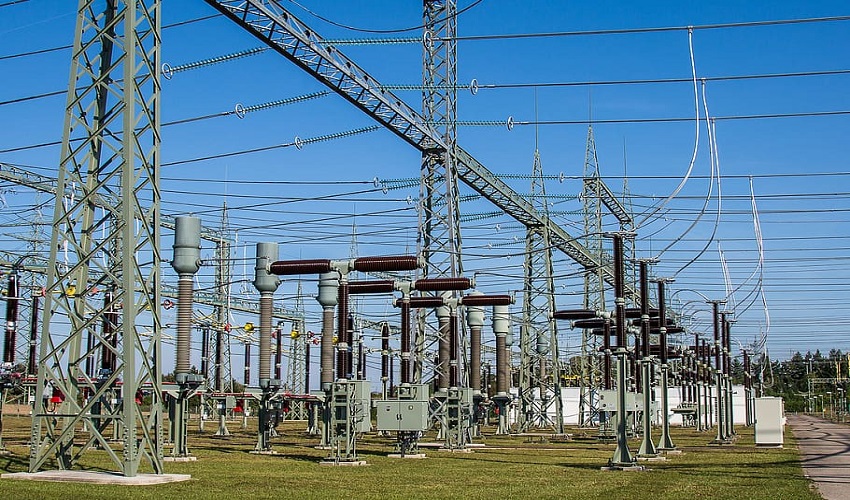
To attain a position of international excellence in educational and research activities related to Electrical Engineering.
Mission |
- To provide a dynamic and scholarly environment where in students learn independently and in collaboration with others to develop a disciplined as well as innovative approach to their careers as professional engineers, researchers or teachers.
- To produce qualified, well-round, and motivated students with fundamental and cutting-edge technical knowledge in electrical engineering to serve the nation and the world.
- To pursue creative research and new technologies in electrical engineering and across other disciplines in order to serve the needs of industry, government, society and the scientific community by expanding the sound knowledge in the field.
- To develop partnerships with industrial and government agencies.
- To achieve visibility by active participation in conferences, technical and community activities.
- To publish enduring scientific articles and books.
Programs Offered |
|
Name of the course |
Intake |
Year of Commencement |
| Electrical & Electronics Engineering |
40 |
1980 – 1981 |
Program Outcomes (PO’s) |
PO1: Engineering Knowledge: Apply knowledge of mathematics, natural science, computing, engineering fundamentals and an engineering specialization as specified in WK1 to WK4 respectively to develop to the solution of complex engineering problems.
PO2: Problem Analysis: Identify, formulate, review research literature and analyze complex engineering problems reaching substantiated conclusions with consideration for sustainable development. (WK1 to WK4).
PO3: Design/Development of Solutions: Design creative solutions for complex engineering problems and design/develop systems/components/processes to meet identified needs with consideration for the public health and safety, whole-life cost, net zero carbon, culture, society and environment as required. (WK5)
PO4: Conduct Investigations Of Complex Problems: Conduct investigations of complex engineering problems using research-based knowledge including design of experiments, modeling, analysis & interpretation of data to provide valid conclusions. (WK8).
PO5: Engineering Tool Usage: Create, select and apply appropriate techniques, resources and modern engineering & IT tools, including prediction and modeling recognizing their limitations to solve complex engineering problems. (WK2 and WK6)
PO6: The Engineer and The World: Analyze and evaluate societal and environmental aspects while solving complex engineering problems for its impact on sustainability with reference to economy, health, safety, legal framework, culture and environment. (WK1, WK5 and WK7).
PO7: Ethics: Apply ethical principles and commit to professional ethics, human values, diversity and inclusion; adhere to national & international laws. (WK9)
PO8: Individual and Collaborative Team work: Function effectively as an individual, and as a member or leader in diverse/multi-disciplinary teams.
PO9: Communication: Communicate effectively and inclusively within the engineering community and society at large, such as being able to comprehend and write effective reports and design documentation, make effective presentations considering cultural, language, and learning differences.
PO10: Project Management and Finance: Apply knowledge and understanding of engineering management principles and economic decision-making and apply these to one’s own work, as a member and leader in a team, and to manage projects and in multidisciplinary environments.
PO11: Life-Long Learning: Recognize the need for, and have the preparation and ability for i) independent and life-long learning ii) adaptability to new and emerging technologies and iii) critical thinking in the broadest context of technological change. (WK8)
Knowledge and Attitude Profile(WK) |
WK1: A systematic, theory-based understanding of the natural sciences applicable to the discipline and awareness of relevant social sciences.
WK2: Conceptually-based mathematics, numerical analysis, data analysis, statistics and formal aspects of computer and information science to support detailed analysis and modeling applicable to the discipline.
WK3: A systematic, theory-based formulation of engineering fundamentals required in the engineering discipline.
WK4: Engineering specialist knowledge that provides theoretical frameworks and bodies of knowledge for the accepted practice areas in the engineering discipline; much is at the forefront of the discipline.
WK5: Knowledge, including efficient resource use, environmental impacts, whole-life cost, re-use of resources, net zero carbon, and similar concepts, that supports engineering design and operations in a practice area.
WK6: Knowledge of engineering practice (technology) in the practice areas in the engineering discipline.
WK7: Knowledge of the role of engineering in society and identified issues in engineering practice in the discipline, such as the professional responsibility of an engineer to public safety and sustainable development.
WK8: Engagement with selected knowledge in the current research literature of the discipline, awareness of the power of critical thinking and creative approaches to evaluate emerging issues.
WK9: Ethics, inclusive behavior and conduct. Knowledge of professional ethics, responsibilities, and norms of engineering practice. Awareness of the need for diversity by reason of ethnicity, gender, age, physical ability etc. with mutual understanding and respect, and of inclusive attitudes.
Program Specific Outcomes (PSO’s) |
PSO 1: Ability to specify architect, design and analyze systems that efficiency generate, transmit, distribute and utilize electrical power.
PSO 2: Ability to specify design, prototype and test modern electronic systems that perform analog and digital processing function.
PSO 3: Ability to use software for design, simulation and analysis of electrical system.
COURSE OUTCOMES
|
Objectives |
- Fundamental knowledge — To equip the students with knowledge of fundamentals of electrical engineering with exposure to both analytical techniques and experiment values.
- Design skills — To equip the students with problem-solving skills and help them to develop abilities to solve engineering problems by participating in creative design projects.
- Professional skills — To equip the students with communication and leadership skills within an environment that nurtures ethical behavior.
- Self-learning — To encourage the students to pursue self-learning and personal development experiences in rigorous programs and through participation in undergraduate research opportunities.
Salient Features |
- The department conducts seminars on recent technical advancements and preparatory tests to enhance communication and soft skills of students in order to strengthen their chances to achieve their goals.
- The cut-sections of various machines and transparent models of instruments have been procured to give the students a practical insight into their working.
- A separate electrical workshop enables the students to learn practical applications.
- The students have free access to text and reference books from well known publishers, journals, magazines, lab manuals, lecturers’ notes, project reports, seminar/ training reports, alumni contacts, university question papers and syllabus from department learning resource center.
- Industrial exposure: Organization of industrial visits, Workshops & trainings on modern research areas, expert lectures by faculty from industries and reputed institutes are routine activities in the department.
Internships In Industries |
- The department conducts periodical lectures by experts for the benefit of students and also imparts advanced teaching and training in specialized subjects for the faculty members.
- Students are motivated to undergo vocational training in reputed industries to upgrade their practical knowledge. They take up project works in the college as well as in industries as part of their curriculum during the final year. Many projects are approved and financed by KSCST and are also selected for the state level seminar cum exhibition.
About Us |
The Electrical & Electronics Department EEE at SJMIT was introduced in the year 1980-81, with an intake of 40 students. Since its inception, department has been always on its toes for the academic excellence.
The department of EEE has qualified, experienced and enthusiastic faculty members to accept the challenges in new developments. To update the knowledge, the faculties take keen interest in continued education.
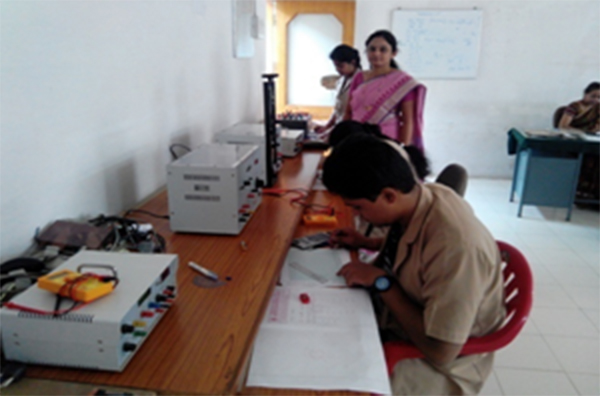
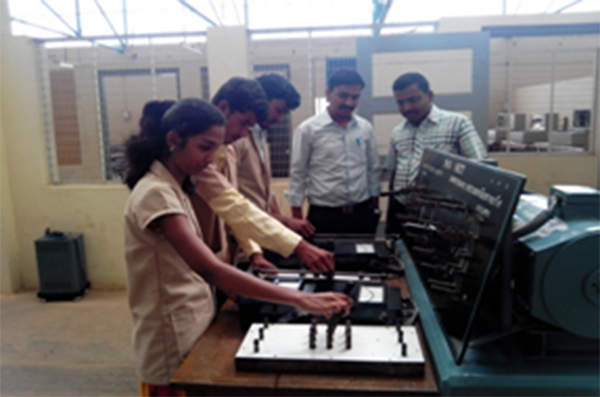
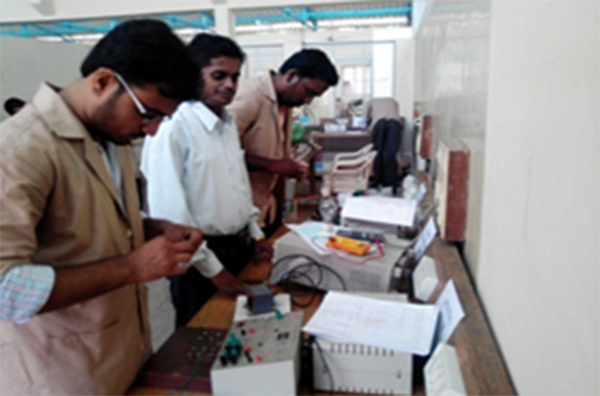
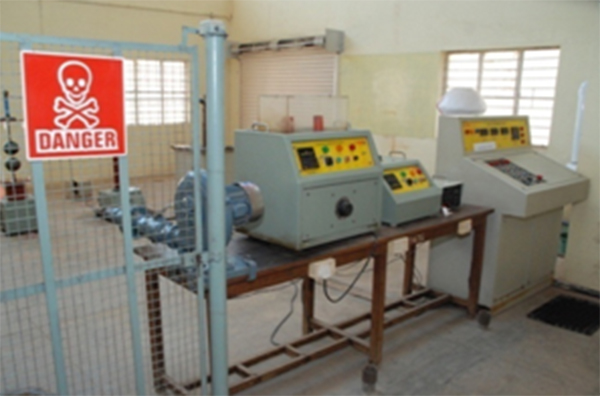
The department has well equipped laboratories and very good infrastructure availability in terms of classrooms, library and advanced state-of-art laboratories. Apart from main library, the departmental library provides immediate reference books to students as and when required. The number of books available in the departmental library is around 600.
Activities |
The department conducts Technical talks from ISTE Student Chapter and organizes various workshops/seminars for the students in a continual basis for their career development and also we organize personality development programmes for students.
The department works very actively to prepare the students by training on soft skills and many of our students have been placed in MNCs like Infosys, L&T, Wipro, Apara, HCL, Tech Mahindra, Accenture etc.
Teaching Faculty Details |
|
SL No |
Faculty name |
Designation |
Experience in years |
Qualification |
Research Interest |
Contact Email ID |
| 01 | 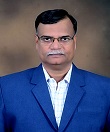 Dr. Kumaraswamy B.G Dr. Kumaraswamy B.G |
Prof and Head | 32 | Ph.D Wind Energy |
Wind Energy |
9448133534 |
| 02 |
|
Asso.Prof. | 14 | M.Tech Power System, Ph.D |
Power System | scm.eee@sjmit.ac.in |
| 03 |
|
Asst.Prof. | 17.1 | M.Tech, (Ph.D) Digital Electronics |
Digital Electronics | crk.eee@sjmit.ac.in |
| 04 |  Prof. Sushmitha Deb Prof. Sushmitha Deb |
Asst.Prof. | 18 | M.Tech (Ph.D) Power Electronics |
Power Electronics | sd.eee@sjmit.ac.in |
| 05 |
|
Asst.Prof. | 11.1 | M.Tech (Ph.D.) Digital Electronics |
Digital Electronics | sudhat@sjmit.ac.in |
| 06 |
|
Asst.Prof. | 10 | M.Tech Power System |
Power System | sk.eee@sjmit.ac.in |
| 07 |
|
Asst.Prof. | 06 | M.Tech CAID |
CAID | md.eee@sjmit.ac.in |
| 08 |
|
Asst.Prof | 1.8 | M.Tech Power System |
— | noorfathima@sjmit.ac.in |
 Dr. Manjunatha S.C
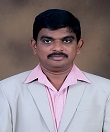 Prof. Chandrashekar Kambali
 Prof. Sudha T
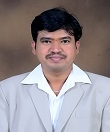 Prof. Sanjay Kumar K
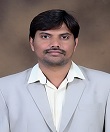 Prof. Madhu kumar Davangere
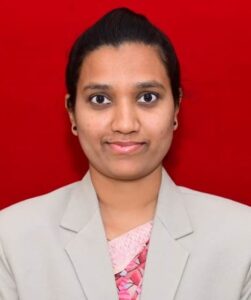 Prof. Noor Fathima
List of Technical and Non-Teaching Staff |
| Sl.No. | Name | Designation | Qualification | Experience in Years |
| 01 | Veeranagowda C | Foreman | ITI | 26 |
| 02 | Mamatha M | Instructor | Diploma in E&C | 16.7 |
| 03 | Mahesh M M | Asst. Instructor | ITI | 08 |
| 04 | Mr.Shivaraj | Peon | SSLC | 03 |
Laboratory Details |
|
|
|
|
|
|