
Vision |
To be recognized as an excellent Department in Electronic & Communication Engineering that provides a great learning experience and to be a part of an outstanding community with an admirable environment.
Mission |
- To provide a student centered learning environment which emphasizes close faculty student interaction and co-operative education.
- To prepare graduates who excel in the engineering profession, qualified to pursue advanced degrees and possess the technical knowledge, critical thinking skills, creativity, and ethical values.
- To train the graduates for attaining leadership in developing and applying technology for the betterment of society and sustaining the world environment.
Program Offered |
|
Name of the course |
Intake |
Year of Commencement |
| Electronics & Communication Engineering | 90 | 1982 – 1983 |
Program Outcomes (PO’s) |
PO1: Engineering Knowledge: Apply knowledge of mathematics, natural science, computing, engineering fundamentals and an engineering specialization as specified in WK1 to WK4 respectively to develop to the solution of complex engineering problems.
PO2: Problem Analysis: Identify, formulate, review research literature and analyze complex engineering problems reaching substantiated conclusions with consideration for sustainable development. (WK1 to WK4).
PO3: Design/Development of Solutions: Design creative solutions for complex engineering problems and design/develop systems/components/processes to meet identified needs with consideration for the public health and safety, whole-life cost, net zero carbon, culture, society and environment as required. (WK5)
PO4: Conduct Investigations Of Complex Problems: Conduct investigations of complex engineering problems using research-based knowledge including design of experiments, modeling, analysis & interpretation of data to provide valid conclusions. (WK8).
PO5: Engineering Tool Usage: Create, select and apply appropriate techniques, resources and modern engineering & IT tools, including prediction and modeling recognizing their limitations to solve complex engineering problems. (WK2 and WK6)
PO6: The Engineer and The World: Analyze and evaluate societal and environmental aspects while solving complex engineering problems for its impact on sustainability with reference to economy, health, safety, legal framework, culture and environment. (WK1, WK5 and WK7).
PO7: Ethics: Apply ethical principles and commit to professional ethics, human values, diversity and inclusion; adhere to national & international laws. (WK9)
PO8: Individual and Collaborative Team work: Function effectively as an individual, and as a member or leader in diverse/multi-disciplinary teams.
PO9: Communication: Communicate effectively and inclusively within the engineering community and society at large, such as being able to comprehend and write effective reports and design documentation, make effective presentations considering cultural, language, and learning differences.
PO10: Project Management and Finance: Apply knowledge and understanding of engineering management principles and economic decision-making and apply these to one’s own work, as a member and leader in a team, and to manage projects and in multidisciplinary environments.
PO11: Life-Long Learning: Recognize the need for, and have the preparation and ability for i) independent and life-long learning ii) adaptability to new and emerging technologies and iii) critical thinking in the broadest context of technological change (WK8).
Knowledge and Attitude Profile(WK) |
WK1: A systematic, theory-based understanding of the natural sciences applicable to the discipline and awareness of relevant social sciences.
WK2: Conceptually-based mathematics, numerical analysis, data analysis, statistics and formal aspects of computer and information science to support detailed analysis and modeling applicable to the discipline.
WK3: A systematic, theory-based formulation of engineering fundamentals required in the engineering discipline.
WK4: Engineering specialist knowledge that provides theoretical frameworks and bodies of knowledge for the accepted practice areas in the engineering discipline; much is at the forefront of the discipline.
WK5: Knowledge, including efficient resource use, environmental impacts, whole-life cost, re-use of resources, net zero carbon, and similar concepts, that supports engineering design and operations in a practice area.
WK6: Knowledge of engineering practice (technology) in the practice areas in the engineering discipline.
WK7: Knowledge of the role of engineering in society and identified issues in engineering practice in the discipline, such as the professional responsibility of an engineer to public safety and sustainable development.
WK8: Engagement with selected knowledge in the current research literature of the discipline, awareness of the power of critical thinking and creative approaches to evaluate emerging issues.
WK9: Ethics, inclusive behavior and conduct. Knowledge of professional ethics, responsibilities, and norms of engineering practice. Awareness of the need for diversity by reason of ethnicity, gender, age, physical ability etc. with mutual understanding and respect, and of inclusive attitudes.
Program Specific Outcomes (PSO’s) |
PSO 1: Analyse and Design Electronic Systems for Signal Processing and Communication Applications.
PSO 2: Demonstrate the Conceptual Domain Knowledge With Respect to Architecture, Design, Analysis and Engineering deployment in Data Communication and Computer Networking. Embedded system. Microcontroller, Advanced communication system.
PSO 3: Identify and Apply Domain Specific Tools For Design, Analysis, Synthesis and Validation Of VLSI, Optical Fiber Communication and Communication Systems.
COURSE OUTCOMES2015 Scheme (CBCS) Click.. here.2017 Scheme (CBCS) Click.. here.2018 Scheme (CBCS) Click.. here.2021 Scheme (CBCS) Click.. here.2022 Scheme (CBCS) Click.. here. |
Professional Forum |
ISTE Student chapter conducted in the department
Objectives |
- To train students to meet industry challenges.
- Aiming to improve the department as center for an excellence.
- Strengthening the number of Doctorates.
- To create center for Excellence in Power Electronics, VLSI & Communication Solution providers to industry.
- Providing Industrial Training for students and Faculty.
- To start graduate/post-graduate course in the emerging technologies.
- Establishing Research and Consultancy Center.
- Establishing Innovation Center.
- Establishing Center for Training Rural Youth in IT.
- Emphasizing on pragmatics and practical knowledge.
- To achieve distinguished academic results.
- To inculcate Reputed Professional discipline work culture for quality education.
Salient Features |
- Effective teaching learning process and modern infrastructure.
- Continuous Assessment of student, teacher-guardian scheme and career counseling for all semesters.
- Industry Institute interaction cell, Training and Placement cell & Personality Development cell for both pre final and final year students.
- Industries based project work development during final year.
About Us |
Department of Electronics & Communication was started in the year 1982 with an intake of 100 students & the Department has good academic excellence with a ring of highly qualified & experienced faculty members.
The Department of Electronics and Communication Engineering at SJMIT has a strong focus on providing technical skills to the students with a strong background in mathematics, science and engineering and to enable students to solve problems through analytical reasoning with a motivation to cater to the local and global needs of technological growth. The department provides students an adequate practical training by way of laboratory sessions, design and problem based learning. During learning process, we also emphasize the vital component of effective oral and written communication skills. Students of E & C are under meticulous guidance by the dedicated faculty members that ensures quality teaching with a balanced blend of theoretical as well as practical stuff. Many of our faculties have registered for Ph.D. and are on the verge of being awarded. They attend various workshops, conferences and are involved in R&D activities. Many of our faculties have represented themselves at National & International conferences and presented technical papers.
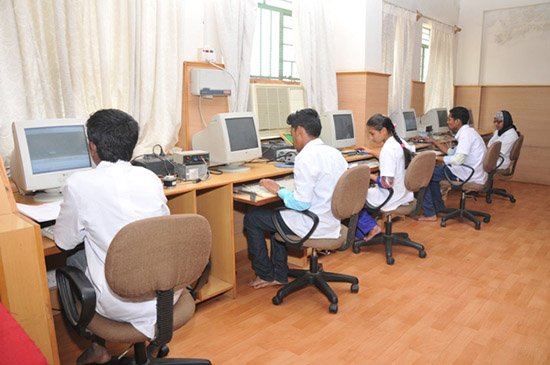
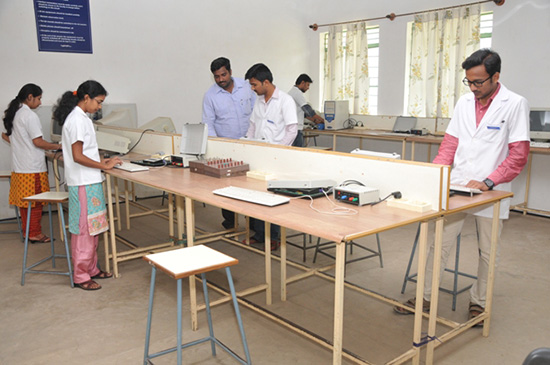
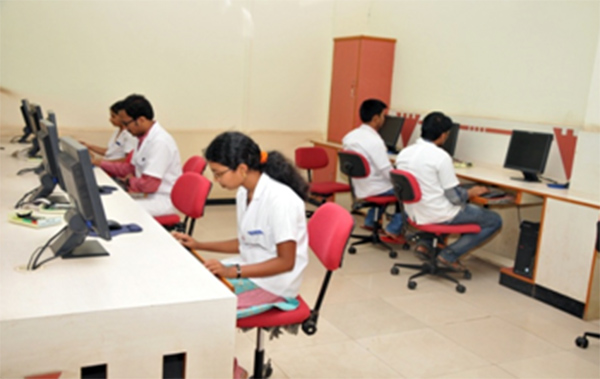
The Department has all the necessary infrastructure and educational facilities with regard to class rooms, labs, library etc. The laboratories are well equipped with latest technology equipments. It also has store house of knowledge – the departmental library which is well stacked with good collection of books. Besides academics, the department organizes continuous educational programs to enhance knowledge on advanced topics. Technical seminars, personality development programs are conducted regularly.
The Department has the credit of organizing project exhibition ‘TECHNOFEST’, a platform to exhibit the talent of hobby projects as well as final year projects. TECHNOFEST had a very good response from visitors. Many of the projects have been selected for KSCST.
Activities |
The Department is conducts a Project Techno fest and Symposium every year for exposing the talents of the students. These are great boon to the improvement of the technical expertise of our future engineers. Department is conducting a various seminars, workshops from ISTE body for the students career development.
The Department of Electronics & Communication Engineering works actively to prepare the students by training on Group Discussions, seminars, soft skills and communication skills. Due to the perseverance in training and placements, many of our students have been placed in various MNC’s like Infosys, L&T, Wipro, Apara, HCL, Tech Mahindra, Accenture etc.
Teaching Faculty Details |
|
Sl No. |
Faculty Name |
Designation |
Exp. in years |
Qualification |
Research Interest |
Email ID |
|
01 |
|
Prof. & Head |
27.9 |
M.Tech, Ph.D |
Power Electronics |
9741559695 |
|
02 |
|
Asso. Prof |
12.6 |
M.Tech (VLSI Design & Embedded Systems)Ph.D |
Embedded Systems |
|
|
03 |
|
Asst. Prof |
20.9 |
M.Tech (Digital Communication and Networking) |
Communication System |
|
|
04 |
|
Asst. Prof. |
18.6 |
M.Tech, |
Embedded Systems |
|
|
05 |
|
Asst. Prof |
16.3 |
M.Tech (Digital Communication and Networking) |
Digital Communication and Networking |
|
|
06 |
|
Asst. Prof |
15.3 |
M.Tech (Digital Electronics and communication) |
Digital Electronics & Communication |
|
|
07 |
|
Asst. Prof |
14.9 |
M.Tech (VLSI Design & Embedded Systems) |
VLSI & Embedded |
|
|
08 |
|
Asst. Prof |
13.8 |
M.Tech (Digital Communication) |
Image Processing |
|
|
09 |
|
Asst. Prof |
12.6 |
M.Tech (Digital Electronic & Communication) |
Embedded Systems |
|
|
10 |
|
Asst. Prof |
10.6 |
M.Tech (Digital Communication & Networking) |
Digital communication and Networking |
|
|
11 |
|
Asst. Prof. |
1.8 |
M.Tech, |
|
|
|
12 |
|
Asst. Prof. |
0.9 |
M.Tech, |
|
|
|
13 |
|
Asst. Prof. |
0.9 |
M.Tech, |
|
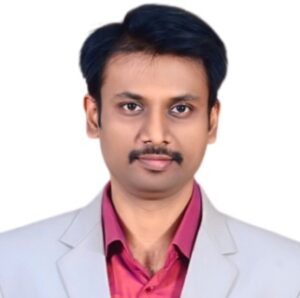
 Dr. Siddesh K B
 Dr. Chetan S
 Prof. Roopa S
 Prof. Farzana Parveen B A
 Prof. Lavakumar T B
 Prof. Sudarshan M K
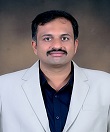 Prof. Sandeep V R
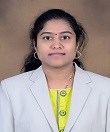 Prof. Tanuja T
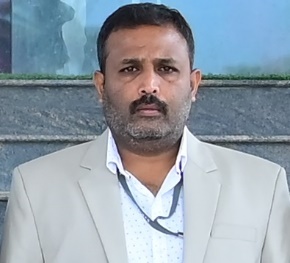 Prof. Raghu S
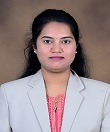 Prof. Nandini G R
 Prof. DIVYA K
 Prof. Sushma R
 Prof. Syeda husna
Technical & Non Teaching Staff Details |
| Sl No. | Name | Designation | Qualification / Specialization | Exp. in years |
| 01 | Sri. Syed M Pasha | System Admin | Diploma (E&C), MSc (IT) | 20.9 |
| 02 | Sri. Manjunath S | Programmer | Diploma (E&C) | 21.3 |
| 03 | Sri. Rudresh L | Instructor | ITI (EM) | 21.3 |
| 04 | Sri. Devaraj C J | Instructor | Diploma (E&C) | 10.8 |
| 05 | Sri. Somashekar M T | Instructor | Diploma (E&C) | 10.8 |
| 06 | Sri. Channaiah T M | Instructor | BE | 07 |
| 07 | Sri. Manjunatha G M | Asst Instructor | ITI | 8.11 |
| 08 | Sri. Charanraja H M | Helper | ITI | 0 |
| 09 | Smt. Vimalakshi A | Attender | PUC | 6.7 |
The department is equipped with the following Labs |
- Analog Electronics Lab
- Logic Design Lab
- Microcontrollers Lab
- HDL Lab
- Digital Signal Processing Lab
- Analog Communication Lab + LIC Lab
- Advanced Communication Lab
- Microprocessor Lab
- VLSI Lab
- Power Electronics Lab
|
|
|
|
|
|