
Vision |
To establish an ideal education which imparts need based and value based technical education at all times and produces a team of world class leaders in all spheres of technical education
Mission |
- To provide excellent education to the deserving youth to transform them into world class leaders in their field.
- To encourage and promote need based research and development in the field of technical education.
- To motivate the entrepreneurial skills among youth and to impart the knowledge to lead a self dependent and value added life.
Programs Offered |
|
Sl. No. |
Degree | Course | Date of Commencement | Intake |
| 1. | Bachelor of Engineering | Mechanical Engineering | 1980 | 30 |
Program Outcomes (PO’s) |
PO1: Engineering Knowledge: Apply knowledge of mathematics, natural science, computing, engineering fundamentals and an engineering specialization as specified in WK1 to WK4 respectively to develop to the solution of complex engineering problems.
PO2: Problem Analysis: Identify, formulate, review research literature and analyze complex engineering problems reaching substantiated conclusions with consideration for sustainable development. (WK1 to WK4)
PO3: Design/Development of Solutions: Design creative solutions for complex engineering problems and design/develop systems/components/processes to meet identified needs with consideration for the public health and safety, whole-life cost, net zero carbon, culture, society and environment as required. (WK5)
PO4: Conduct Investigations Of Complex Problems: Conduct investigations of complex engineering problems using research-based knowledge including design of experiments, modeling, analysis & interpretation of data to provide valid conclusions. (WK8).
PO5: Engineering Tool Usage: Create, select and apply appropriate techniques, resources and modern engineering & IT tools, including prediction and modeling recognizing their limitations to solve complex engineering problems. (WK2 and WK6)
PO6: The Engineer and The World: Analyze and evaluate societal and environmental aspects while solving complex engineering problems for its impact on sustainability with reference to economy, health, safety, legal framework, culture and environment. (WK1, WK5 and WK7).
PO7: Ethics: Apply ethical principles and commit to professional ethics, human values, diversity and inclusion; adhere to national & international laws. (WK9)
PO8: Individual and Collaborative Team work: Function effectively as an individual, and as a member or leader in diverse/multi-disciplinary teams.
PO9: Communication: Communicate effectively and inclusively within the engineering community and society at large, such as being able to comprehend and write effective reports and design documentation, make effective presentations considering cultural, language, and learning differences.
PO10: Project Management and Finance: Apply knowledge and understanding of engineering management principles and economic decision-making and apply these to one’s own work, as a member and leader in a team, and to manage projects and in multidisciplinary environments.
PO11: Life-Long Learning: Recognize the need for, and have the preparation and ability for i) independent and life-long learning ii) adaptability to new and emerging technologies and iii) critical thinking in the broadest context of technological change. (WK8)
Knowledge and Attitude Profile(WK) |
WK1: A systematic, theory-based understanding of the natural sciences applicable to the discipline and awareness of relevant social sciences.
WK2: Conceptually-based mathematics, numerical analysis, data analysis, statistics and formal aspects of computer and information science to support detailed analysis and modeling applicable to the discipline.
WK3: A systematic, theory-based formulation of engineering fundamentals required in the engineering discipline.
WK4: Engineering specialist knowledge that provides theoretical frameworks and bodies of knowledge for the accepted practice areas in the engineering discipline; much is at the forefront of the discipline.
WK5: Knowledge, including efficient resource use, environmental impacts, whole-life cost, re-use of resources, net zero carbon, and similar concepts, that supports engineering design and operations in a practice area.
WK6: Knowledge of engineering practice (technology) in the practice areas in the engineering discipline.
WK7: Knowledge of the role of engineering in society and identified issues in engineering practice in the discipline, such as the professional responsibility of an engineer to public safety and sustainable development.
WK8: Engagement with selected knowledge in the current research literature of the discipline, awareness of the power of critical thinking and creative approaches to evaluate emerging issues.
WK9: Ethics, inclusive behavior and conduct. Knowledge of professional ethics, responsibilities, and norms of engineering practice. Awareness of the need for diversity by reason of ethnicity, gender, age, physical ability etc. with mutual understanding and respect, and of inclusive attitudes.
Program Specific Outcomes (PSO’s) |
PSO 1: Apply their knowledge in the domain of engineering mechanics, thermal and fluid sciences to solve engineering problems utilizing advanced technology.
PSO 2: Successfully apply the principles of design, analysis and implementation of mechanical systems/processes which have been learned as a part of the curriculum.
PSO 3: Develop and implement new ideas on product design and development with the help of modern CAD/CAM tools, while ensuring best manufacturing practices.
Objectives |
- To provide opportunities and encouragement to students for enhancing their skills and attributes which are expected to be the traits of good mechanical engineers.
- Supporting and developing distinctive competencies of faculty members and students to build a new generation of researchers.
- Transferring and appropriating modern technology to fit with the local environment, for the purpose of national development.
- Linking research policies with goals of the universities and needs of society by providing suitable advice and addressing problems through innovation and research.
- Aiming to improve the department as center for an excellence.
- Aiming to achieve 100% placement.
- To impart best mechanical engineering knowledge through well qualified, experienced and dedicated faculty members and supporting staff.
- To continuously monitor the academic progress of the students.
- To continuously counsel the students for their future placements.
Salient Features |
- VTU recognized research center.
- Provision for research at three centers in the department in VTU sponsored research centre and KSBDB sponsored biodiesel plant.
- Encouraging micro projects in the second year itself.
- Intern-ship in vacation for students of all semesters.
- Supporting institutions’ general maintenance work including fabrication, carpentry and damage precautions.
Internships in Industries |
Students are encouraged to take up training during vacations of all semesters. The Eighth semester is devoted entirely to project work which is usually taken by the students at industries thereby enabling them to have industrial exposure. This not only gives the students an opportunity to work in a challenging environment with state of the art technology, but also supplements their work culture through which they can gain managerial and technical skills.
About Us |
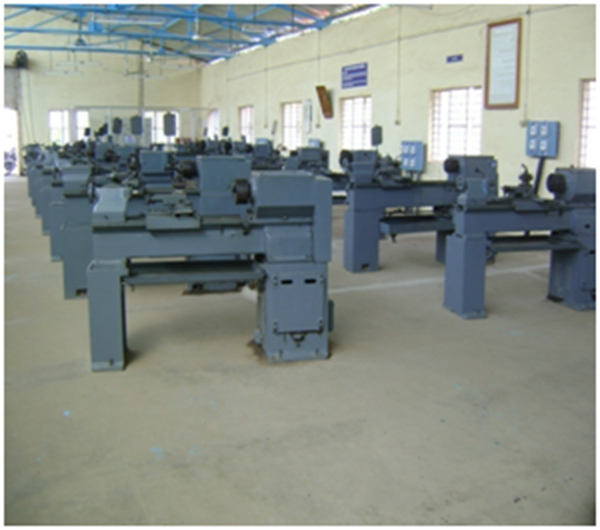
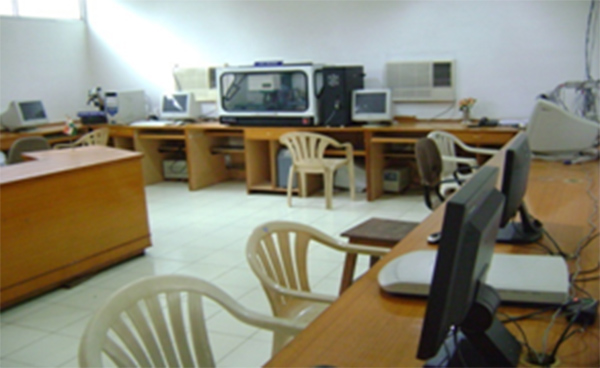
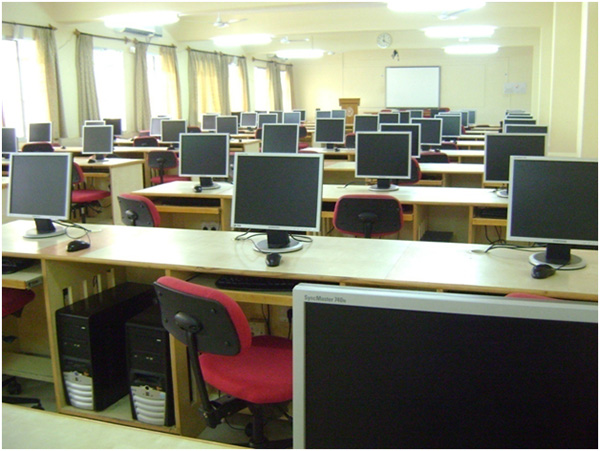
Department of Mechanical Engineering was started in the year 1980 since the inception of the college with an intake of 60 students. The Department is enriched with a wealth of senior most faculties with many of them having experience of more than three decades with M.E., M.Tech and Ph.D qualifications while many others are also pursuing Doctoral Research. Mechanical Department has well equipped laboratories and workshops with sufficient carpet area. Department serves as the general maintenance house of the entire SJM Vidyapeetha and works timely and punctually. The Department has well furnished digital class room with computer systems of latest configuration and application software.
The departmental library has a sound collection of books including reference books, text books, and journals donated by outgoing students of the department which assist the students of the department to enrich their knowledge. Besides academics, the Department regularly organizes technical seminars, quizzes and personality development programs to enrich the knowledge of students as well as faculty, focusing on the current technical scenario. The Department has secured 17 university ranks so far.
M.Tech in Thermal Power Engineering started of late in academic year 2013-14 with an intake of 18 students. The program emphasizes the application of fundamental principles of thermal engineering for various applications, which include gas turbine power plants, steam power plants, solar appliances, automobiles, IC Engines, refrigeration and air conditioning systems, propulsion systems, heat transfer with a view to build a vibrant learning environment through value based academic principles where in all involved shall contribute effectively and efficiently with all responsibility to prepare students to meet the global challenges.
The Department has a team of dynamic, experienced and highly qualified faculty members who can impart the adequate knowledge to mould the students to industry standards while encouraging them to learn the leading Technologies in the areas of Thermal Power Engineering.
Activities |
The department organizes Personality Development Program (PDP) weekly to the students of all semesters. Conferences, technical talks, seminars, workshops and ISTE student’s chapter activities are conducted as per the need and demand of the students and faculty members. The awareness programs and training activities regarding bio-diesel are carried out every year to facilitate research and entrepreneurship skills among students.
The department works actively to prepare the students by training them through group discussions, industrial visits, soft skills, project demonstration and seminar. Many of our students have been and are being placed in well reputed companies like INFOSYS, ACCENTURE, L&T, IBM, CARITOR, TECH MAHINDRA, JSW, WIPRO, APARA, IFB, INDIAN ARMY etc.,
List of Teaching Faculty |
| Sl No | Faculty Name |
Designation | Experience in Years |
Qualification |
Research Interest |
E-Mail Id |
|
| 01 | 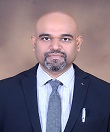 Dr. Bharath P B Dr. Bharath P B |
Professor | 19 | M.Tech, Ph.D | Tribology Of Polymer Composites |
9483190087 |
|
| 02 | 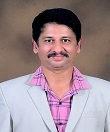 Dr. S P Shivakumar Dr. S P Shivakumar |
Professor & HOD | 18 | M.Tech, Ph.D | Creep Analysis Of Metal Matrix Composites |
9986071267 |
|
| 03 | 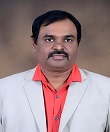 Dr. Rajesh A M Dr. Rajesh A M |
Associate Professor |
16 |
M.Tech, MBA, Ph.D |
Thermal Engineering/Composite Materials |
rajesham@sjmit.ac.in | |
| 04 | 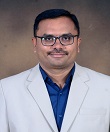 Dr. Satish J Dr. Satish J |
Associate Professor | 18 | M.Tech, Ph.D | Machine Design / Composite Materials | satish.j17@sjmit.ac.in | |
| 05 | 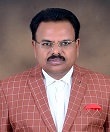 Prof.Nagaraj T Prof.Nagaraj T |
Associate Professor | 27 | M.E (Production Management), (Ph.D*) | Production & Testing Of Mmc & Polymer Composites | t.nagaraj@sjmit.ac.in | |
| 06 | 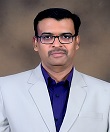 Prof. Madhu K C Prof. Madhu K C |
Associate Professor | 20 | M.Tech (Thermal Power Engineering) | Thermal Engineering |
|
|
| 07 | 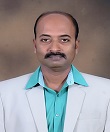 Prof.Prabhuswamy G S Prof.Prabhuswamy G S |
Assistant Professor | 16 | M.Tech (Engineering Analysis & Design) | Mechatronics | prabhuswamy.gs@sjmit.ac.in | |
| 08 | 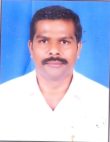 Prof.Vishwanath D Prof.Vishwanath D |
Assistant Professor | 15 | M.Tech (Machine Design) | Machine Design / Composite Materials |
|
|
| 09 | 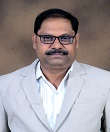 Prof. B Nagaraj Prof. B Nagaraj |
Assistant Professor | 15 | B.E, M.Tech (Machine Design) | b.nagaraj@sjmit.ac.in |
List of Technical & Non-Teaching Staff |
| Sl.No. | Name of the Staff | Designation | Qualification | Experience in years |
| 01 | Sri.B.Prasannakumar | Programmer | DME | 18 |
| 02 | Sri.Ashok B S | Instructor | BE, M.Tech | 3.6 |
| 03 | Sri.Jagadeesha K E | Instructor | DME | 14 |
| 04 | Sri.Sridhar N | Skilled labour | ITI | 10 |
| 05 | Sri.H.K.Nagaraj | Skilled Labour | VII STD | 38 |
| 06 | Sri.N.Prakash | Skilled Labour | I PUC | 35 |
| 07 | Sri.Mahaboob Basha | Helper | X STD | 17 |
| 08 | Sri.Venkatesh K M | Helper | X STD | 31 |
| 09 | Sri.Bheemesh N | Peon | X STD | 06 |
The Department is equipped with following Lab and Workshop Facilities |
- Workshop
- Machine shop
- Welding shop
- Foundry & Forging Lab
- Fitting shop
- Carpentry & Sheet metal Lab
- Computer Aided Engineering Drawing Lab.
- Material Science & Testing Lab
- Fluid Mechanics Lab
- Heat & Mass Transfer Lab
- Measurement Metrology Lab
- Design Lab
- CIM & Automation Lab
- ANSYS Lab
- Energy Conversion Engineering Lab
|
|
|
|
|
|